A tiki patio umbrella is a thatch-style shade structure designed to mimic palm leaves, and it is one of the most effective ways to bring a tropical resort feel to a patio, pool deck, or outdoor dining area. It works like a standard patio umbrella, but its layered canopy changes the visual style, rain behavior, and maintenance routine. When evaluating one, focus on three things: canopy material, frame construction, and base stability.
What Defines a Tiki Patio Umbrella?
A tiki patio umbrella is defined by its thatch-look canopy. Most models use polyethylene (PE) leaves sewn onto a fabric backing, which creates the appearance of a palm roof. Some versions use PVC or synthetic raffia for a lighter, finer texture. The frame is typically a center pole with a set of ribs, and the canopy diameter ranges from 6 to 10 feet. The most popular sizes for residential use are 8 feet; for hospitality projects, 9- and 10-foot models provide wider coverage for tables and lounge areas.
Because the thatch canopy is thick, it blocks sunlight well and gives strong UV protection. The tradeoff is that it is heavier and catches more wind than a smooth canopy. That is not a reason to avoid it, but it explains why pole quality and base weight matter so much for this style.
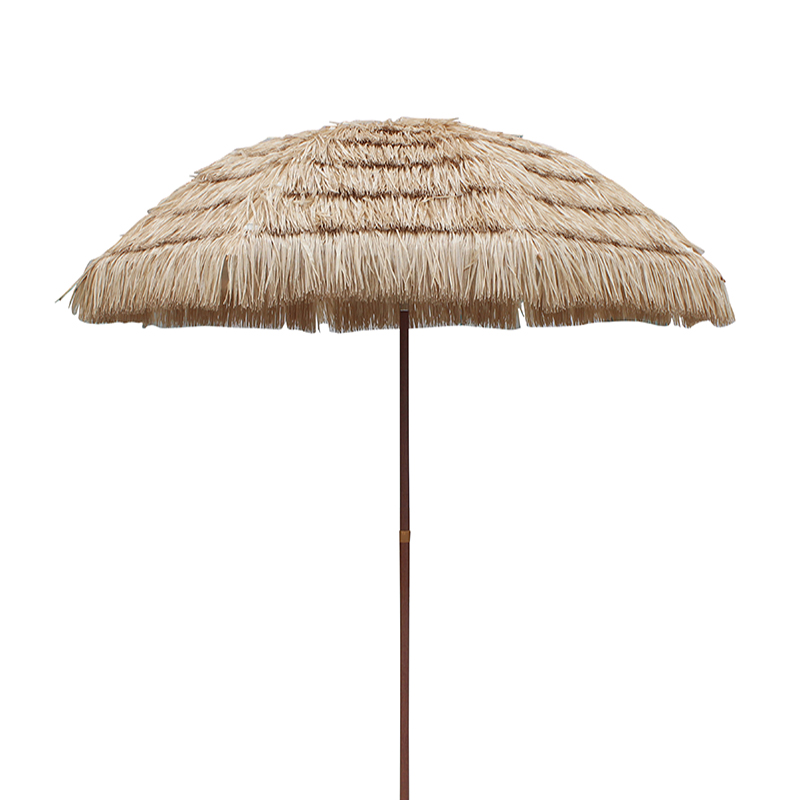 Thatch Patio Tiki Umbrella with Tilting FunctionThis umbrella features a PP grass thatch canopy that mimics natural thatch, providing strong UV protection and a tropical look. Its tiltable design and wood-like pole make it a practical choice for patios and gardens.View Product →
Tiki Patio Umbrella vs. Standard Patio Umbrella
The main distinction is the canopy. A standard patio umbrella uses a smooth polyester, acrylic, or olefin canopy. A tiki umbrella uses layered thatch leaves, which gives it a textured edge and a visible roof-like appearance. That change affects more than looks: the thatch material sheds water differently, creates deeper shade, and needs gentler cleaning. On the other hand, a smooth canopy is lighter, packs down flatter, and is usually easier to maintain.
| Feature | Tiki Patio Umbrella | Standard Patio Umbrella |
|---|---|---|
| Canopy style | Layered thatch leaves | Smooth fabric panels |
| Materials | PE, PVC, or synthetic raffia | Polyester, acrylic, or olefin |
| Wind performance | Catches more wind; needs strong base | Better airflow in light winds; vented models available |
| Maintenance | Brush with mild soap and water | Machine-washable fabric or spot cleaning |
| Best for | Tropical themes, resort and bar areas | Modern patios, general residential use |
If your project needs a more traditional market-umbrella look, a crank-open steel model delivers the same dependable shading with a cleaner silhouette.
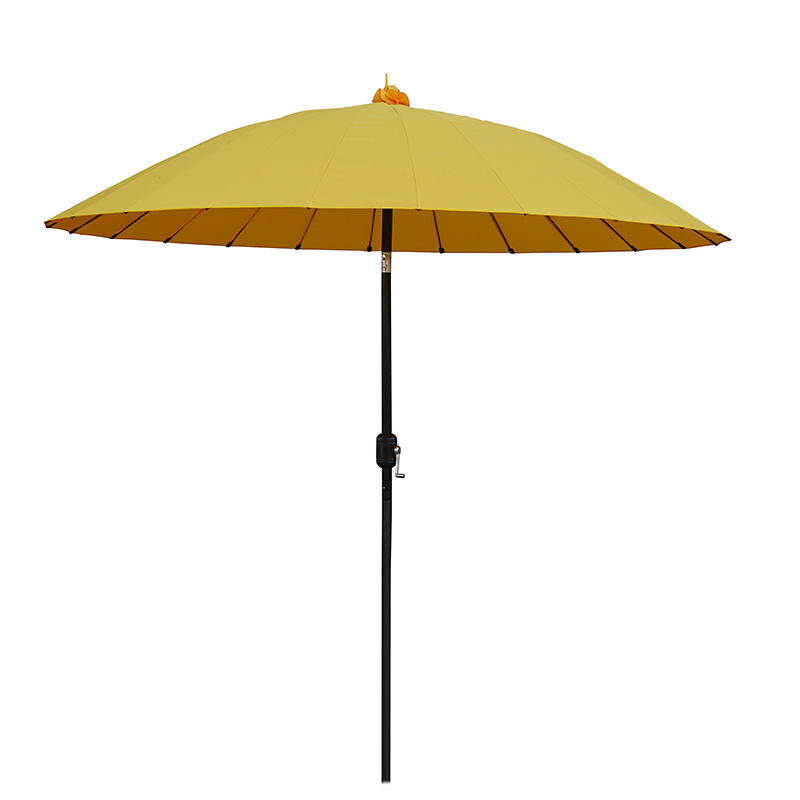 Crank-Open Steel Garden Umbrella with Polyester CanopyA crank-operated steel-framed umbrella with a bright yellow polyester canopy, available in 2.7m or 3.0m diameters. Its sturdy 38mm pole and 24K steel ribs ensure stability, making it a reliable option for home or commercial shade.View Product →
Key Features That Determine Quality
The quality of a tiki patio umbrella is decided by the frame, the canopy, and the operating hardware. Steel poles are heavy but durable; aluminum poles are lighter and resist rust, which makes them a better choice for coastal or humid environments. The thatch itself should be dense, with consistent color and tight stitching. Loose or sparse thatch will look thin after one season and will not create even shade. A tilt function is very useful because it lets you angle the canopy toward the sun; a crank opening system is more convenient than a push-up design for large umbrellas. In windy areas, choose a model with a vented top to reduce pressure and improve stability.
- Frame: aluminum for corrosion resistance, steel for maximum strength.
- Canopy: dense PE thatch with UV protection and water resistance.
- Opening: crank-open is easier; push-up is acceptable on smaller sizes.
- Tilt: a push-button or crank tilt allows better shade control.
- Wind: a vented canopy reduces the chance of lifting or tipping.
How to Choose Size, Base, and Placement
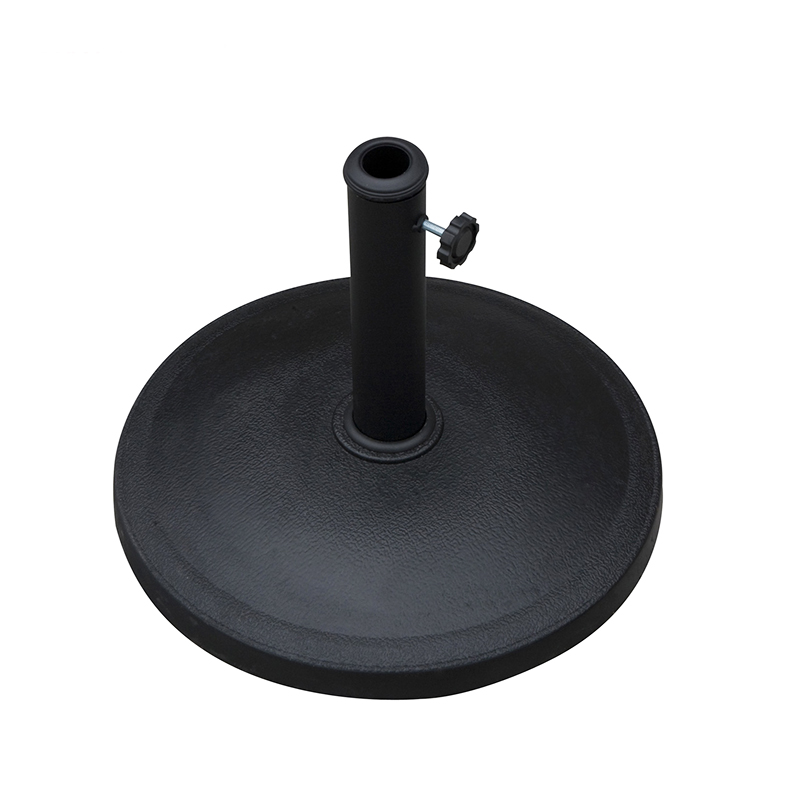
Size should be based on the table or zone you want to shade. A 6-foot umbrella fits a small bistro table. An 8-foot umbrella is the standard choice for a four-seat dining set. A 10-foot canopy covers a large rectangular table or a small lounge group. The base is equally important. A thatch canopy has a bigger surface area than a fabric canopy, so it requires a heavier base to stay put. For an 8-foot tiki umbrella, start with a 50-pound base; for a 10-foot model, use 70 to 80 pounds in normal conditions and more if you expect gusty winds.
| Canopy Diameter | Recommended Use | Base Weight |
|---|---|---|
| 6 ft | Bistro table, balcony corner | 30–40 lb |
| 8 ft | Four-seat dining table | 50–60 lb |
| 10 ft | Large dining group, lounge area | 70–80 lb |
Placement also matters. Avoid positioning the umbrella where wind is channeled between buildings. Check that there is enough clearance above walkways and that the pole does not block traffic. If you mount the umbrella through a table, verify the pole diameter matches the table hole before ordering.
Best Places to Use a Tiki Patio Umbrella
These umbrellas work best in spaces that already lean toward a natural, relaxed, or coastal style. They are also useful in commercial settings where creating a strong atmosphere matters as much as providing shade.
- Hotel and resort pool decks
- Beach clubs and tiki bars
- Restaurant terraces with tropical or island themes
- Residential patios and garden seating areas
- Outdoor wedding and event set-ups
Wholesale Buying Considerations for Businesses
When purchasing tiki patio umbrellas in volume, aesthetics are only the starting point. You need to verify the manufacturer's production capacity and quality control. A supplier with an in-house manufacturing facility can more easily keep frame tolerances consistent, control painting quality, and respond to adjustments in order volume. Ask about the QC steps at each stage, from tube cutting to canopy sewing, and request samples before committing to a full production run.
Custom finishes are another important factor for hospitality and retail brands. You may want to change the pole color, add a logo, or choose a specific thatch shade. Discuss customization options early with the factory, because some processes, such as painted poles or special canopy stitching, affect lead time. If your market requires compliance documents, also confirm that the supplier can provide the necessary certifications and audit reports.
Frequently Asked Questions
Are tiki patio umbrellas weather-resistant?
Yes. The polyethylene thatch used in most tiki umbrellas is water-resistant and blocks UV rays. The metal frame should be powder-coated or otherwise treated to resist rust. That said, no umbrella is made to stay open through a severe storm. Close it or store it when heavy wind and rain are expected.
How do I clean a tiki patio umbrella?
Use a soft brush, mild detergent, and water. Scrub the thatch leaves gently in the direction they hang, so they keep their shape. Rinse fully and let the canopy dry open before closing it. Avoid pressure washers because they can split the synthetic leaves.
Can a tiki umbrella withstand strong wind?
A tiki umbrella can resist moderate wind if the base is heavy and the canopy is vented. However, strong gusts can catch the layered thatch and lift it. The safest practice is to close the umbrella when it will not be in use, especially in coastal or mountain locations where gusts are common.
Does a tiki patio umbrella provide UV protection?
Yes, the dense thatch layer blocks most ultraviolet radiation. The actual level depends on material density and any UV coating applied. If UV performance is critical for your customer or project, ask the factory for test data on the specific fabric.
A tiki patio umbrella is a practical way to add tropical character and dependable shade to an outdoor space. The key is to balance the dramatic thatch look with a well-built frame and the right base. Whether you are styling a garden or equipping a commercial terrace, a properly selected and maintained tiki umbrella will provide years of comfort and visual appeal.